
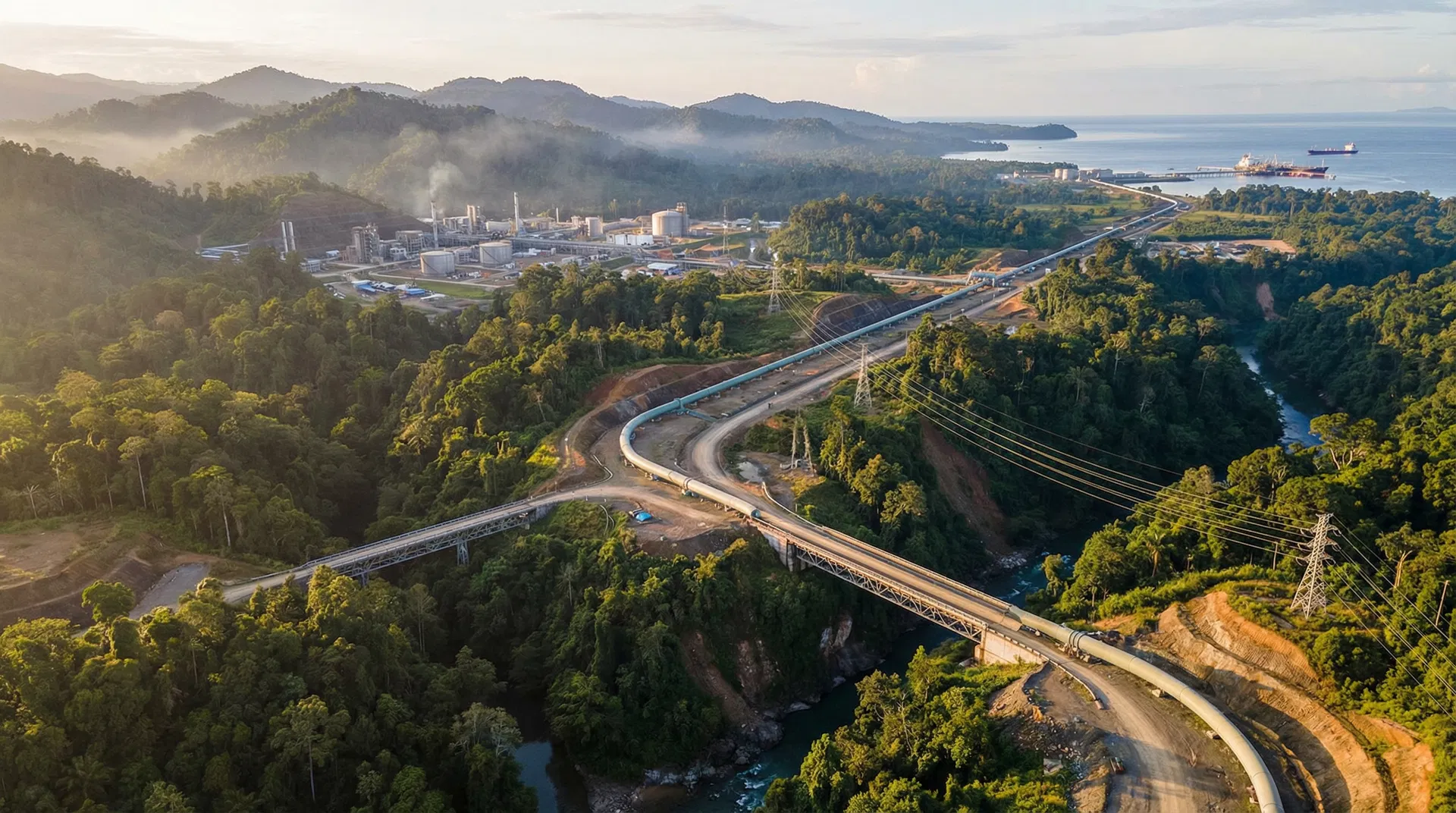
Infrastructure Alignment
Strategic Infrastructure Network
TPEL's licenses are strategically aligned with Papua New Guinea's national infrastructure corridors, enabling efficient resource development and reliable market access
Infrastructure Strategy
TPEL's petroleum licenses are strategically positioned within Papua New Guinea's developing infrastructure landscape. Our license areas benefit from proximity to national transportation corridors, processing facilities, and export pathways — reducing development costs and accelerating the pathway from discovery to production.
This infrastructure alignment positions TPEL as a key contributor to PNG's long-term energy security and economic development, while maximising the value delivered to partners and stakeholders, landowners, and the nation.
Active Licenses
Provinces Covered
Development Phases
First Production Target
Infrastructure Highlights
Key infrastructure advantages that underpin TPEL's development strategy and investment proposition
Strategic Location
TPEL's licenses are positioned in proximity to existing and planned national infrastructure corridors, reducing development lead times and capital requirements.
Processing Facilities
Access to established and planned processing and conditioning facilities supports efficient resource extraction and preparation for domestic and export markets.
Export Connectivity
Proximity to coastal export terminals and domestic distribution networks ensures reliable market access for TPEL's petroleum resources.
Shared Infrastructure
Opportunities to leverage shared infrastructure across license areas deliver economies of scale and operational synergies throughout the development lifecycle.
Regulatory Alignment
All infrastructure development is planned in full compliance with PNG's regulatory framework, including CEPA environmental standards and Department of Petroleum requirements.
Phased Development
A phased infrastructure build-out strategy allows TPEL to manage capital deployment efficiently while progressively unlocking the value of its resource base.
Development Roadmap
A phased approach to infrastructure development that aligns capital deployment with resource appraisal milestones
Exploration & Appraisal
Seismic acquisition, well drilling, and resource appraisal across priority license areas. Infrastructure pre-feasibility studies initiated.
Pre-FEED & Engineering
Front-end engineering and design for field development infrastructure. Environmental and social impact assessments completed.
Construction & Commissioning
Field infrastructure construction, pipeline installation, and facility commissioning. First production targeted.
Full Production
Ramp-up to plateau production rates. Ongoing infrastructure optimisation and capacity expansion as additional resources are developed.
Strategic Benefits
Reduced Development Costs
Proximity to existing and planned national infrastructure significantly reduces capital expenditure and accelerates project development timelines.
Market Access
Direct connection to domestic power generation and international export pathways ensures reliable market access for TPEL's petroleum resources.
Synergy Opportunities
Shared infrastructure enables economies of scale and operational synergies across multiple petroleum projects and license areas.
Invest in Infrastructure-Ready Projects
TPEL's strategic infrastructure alignment offers reduced risk and accelerated development through proximity to PNG's national development corridors.